Granny Flat vs Second Storey Addition: Which Wins in Western Sydney?
You have $220,000 to $260,000 in the renovation budget and a growing family or an ageing parent. In Western Sydney in 2026, that number lands on the same choice-point for thousands of families: build a detached granny flat in the backyard, or lift the roof and add a second storey over the existing house. Both add three bedrooms of extra space. The financials and the day-to-day outcomes look quite different.
Here is a builder’s honest comparison of the two options across cost, rental yield, resale, timeline, and family fit — grounded in what we see across real Blacktown, Kellyville, Rouse Hill and Penrith projects.
The two options side by side
| Detached granny flat (secondary dwelling) | Second storey addition | |
|---|---|---|
| Typical size | 60 m² (2-bed 1-bath) | 90-120 m² (3-bed 1-bath, or 3-bed 2-bath) |
| Typical cost 2026 | $149-$215k depending on suburb and finish | $220-$310k depending on lift complexity |
| Approval pathway | CDC most cases, DA if block fails Housing SEPP | Almost always DA, occasionally CDC on very simple blocks |
| Timeline (contract to occupancy) | 4-7 months | 7-10 months (existing family may need alternative accommodation for 4-6 months) |
| Rental income if rented | $420-$680/week depending on suburb | Not rentable separately (all one dwelling) |
| Value added to property | $140-$200k typically | $250-$380k typically |
| Day-to-day family fit | Full separation — separate entry, kitchen, bathroom | Integrated — one home, more bedrooms |
| Best when | You want rental income OR full independence for a parent / adult child | You want more family space AND long-term hold |
When granny flat wins the maths
The granny flat wins when you want to generate rental income, or when a parent or adult child needs full independence but wants to stay close.
Yield example, Blacktown 2026: $170k build cost, $500/week rent = $26,000 gross annual, roughly 12-15% net yield after rates, insurance, agent fees, minor maintenance. That’s stronger than most residential investment properties. On the same block, the granny flat lifts overall property value by $150-$180k — recovering most of the build cost even without the rent.
Family independence example: A parent moves in but wants their own kitchen, bathroom, and separate entrance. A 60 m² granny flat is exactly right, with full accessibility upgrades (grab rails, level thresholds, hobless shower). Cost the same $170k, no rental income, but the alternative — aged care or a separate property — is much more expensive.
When second storey wins
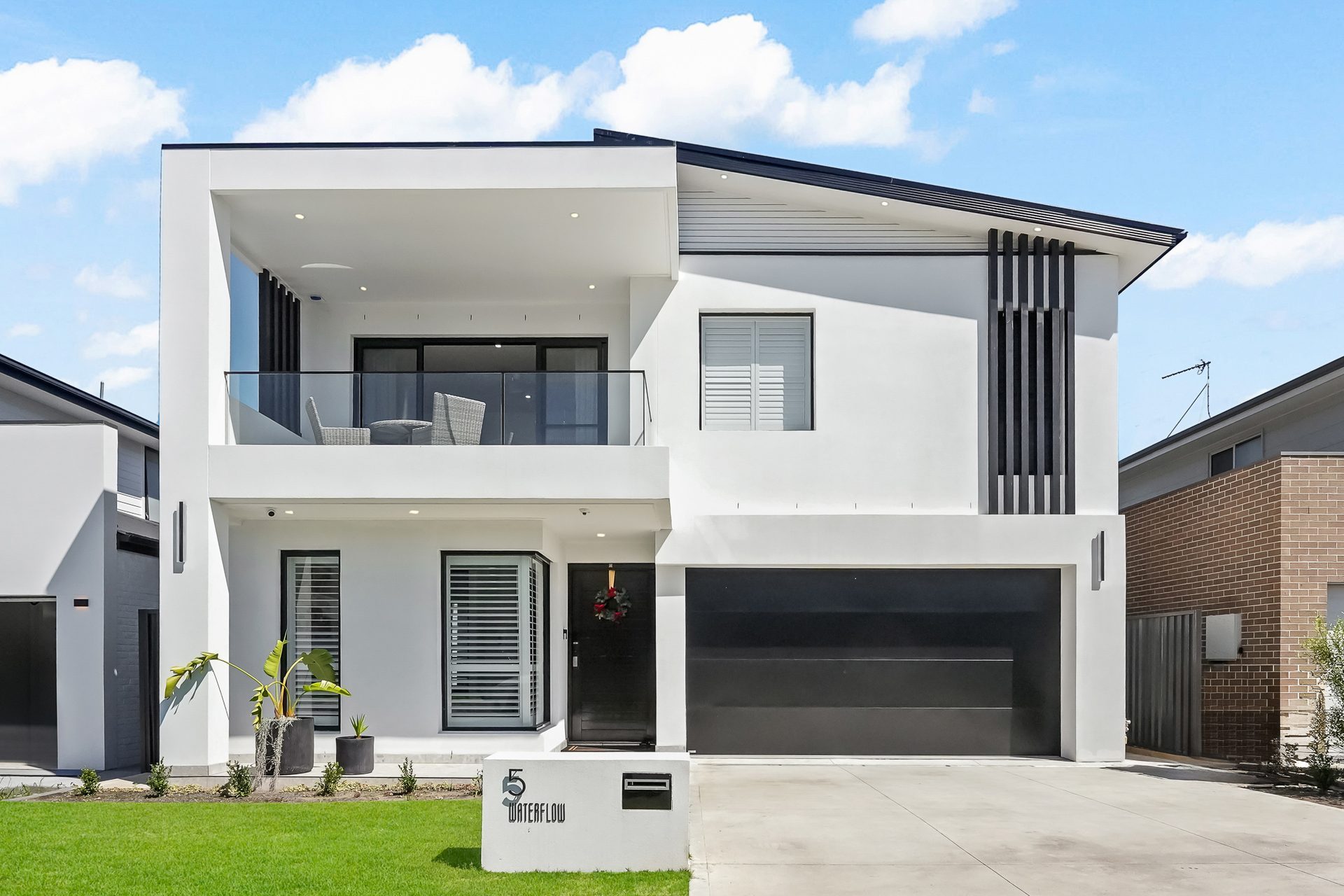
The second storey wins when you want more family space in the same house AND you plan to stay long-term.
Value example, Kellyville 2026: Existing 4-bed single storey worth $1.5m, add 3 upper-floor bedrooms + rumpus + second bathroom for $265k, resale after works around $1.85-$1.9m. Net gain roughly $85-$135k plus the family gets 4-6 more years in the home before it’s outgrown again.
Long-term hold: Because the second storey is fully integrated with the existing house, it can only be captured as sale value on eventual resale (not as ongoing rent). It rewards families staying in place. If the plan is to sell within 3 years, the second storey barely covers its cost after transaction fees and stamp duty on the next property.
The timeline reality
A granny flat build is faster and less disruptive than a second storey. On a granny flat, the family stays in the existing house through the entire build; the tradies work in the backyard and the household life continues largely unchanged. Total timeline is 4-7 months.
A second storey addition is different. The roof comes off. The existing house is exposed to weather during the lift. Depending on how much of the ground floor structure needs strengthening (typically piering under a portion of the perimeter to carry the second storey load), the ground floor may become uninhabitable during construction. Most families move out for 4-6 months. Alternative accommodation adds $18-$32k on top of the build cost for a rental in the same suburb.
Approval — the granny flat is easier
Granny flats have a fast track under the state Housing SEPP. If the block is 450 m² or more and the design meets the code (60 m² GFA, standard setbacks, off-street parking), a CDC issues in 6-10 weeks. See our granny flat rules across Blacktown, The Hills and Penrith for the specific council rules.
A second storey addition is almost always a DA. The Housing Code covers a lift only in very narrow circumstances (matching roof form, no boundary breach, etc.), and any real 3-bedroom second storey overshoots at least one code standard. DA at Blacktown is 16-22 weeks; at The Hills 14-20 weeks; at Penrith 12-18 weeks.
What we’ve built and what we’d recommend
Across roughly 80 secondary-dwelling and 50 second-storey projects in Western Sydney over the last four years, the pattern is:
- Rental play — granny flat wins every time. The yield is real and the exit is easier.
- Multi-gen family in one place — granny flat if privacy matters, second storey if the family wants integrated living with the extra space.
- Just need more bedrooms — second storey wins. Same land, better resale.
- Selling within 3 years — do neither. Sell and buy a bigger home. The transaction friction eats most of the value uplift.
Frequently asked questions
Can I build both a granny flat and a second storey on the same block?
Yes, if the block is large enough (600+ m²) and both meet their respective controls. This is unusual but done — typically an investor with a large block adds a granny flat for rental income and later lifts the roof on the main house for family space.
Which adds more value at resale in 2026 Western Sydney — granny flat or second storey?
Second storey addition typically adds more absolute value ($250-$380k vs $140-$200k). But per dollar invested, they are roughly comparable. Granny flat has the additional advantage of ongoing rental income during the hold, so total return over 5-10 years often favours the granny flat when both cash flow and eventual sale are counted.
How long does a second storey addition take?
7 to 10 months from signed contract to family moving back in. Approval 3-5 months, construction 4-5 months, defects and OC 1-2 weeks. Most families move out for 4-6 months of the construction period.
Do I need to move out during a granny flat build?
No. The tradies work in the backyard and access is through a temporary path along the side of the house. Water and power may briefly connect off the main house (planned outage of 1-2 days). Family life continues.
Can a granny flat be built for parents to move into but reverted to rental later?
Yes, and it’s a common plan. Design for accessibility (level thresholds, grab-rail structure, hobless shower) so the parent’s occupancy is comfortable; when the flat later comes onto the rental market, those features are neutral or positive for most tenants. Some flats sit occupied by family for 8-12 years then transition to rental with minor cosmetic updates.
What is the resale ceiling on a 5-bedroom house in Western Sydney?
Depends heavily on suburb. In Blacktown proper, $1.15-$1.35m for a well-finished 5-bed. In Kellyville and Rouse Hill, $1.85-$2.35m. In Bella Vista and Castle Hill, $2.3-$3.2m. A second storey addition takes a 4-bed to a 5-bed and the price uplift often approaches the difference between those two figures — but only up to the suburb’s ceiling for that number of bedrooms.
Deciding between a granny flat and a second storey in Blacktown, Kellyville, Rouse Hill or Penrith? Get a fast fixed-fee quote for both options — we run the maths and let the numbers pick the winner.
Keep reading
Thinking of building or renovating in Western Sydney?
Book a free, no-obligation consultation. We will walk through your block, your brief and your budget, and tell you honestly whether 13 Homes is the right builder for the job.
Book a Consultation