Knockdown Rebuild vs Renovation: The Real Numbers for a 1980s Western Sydney Home
Take a typical 1980s three-bedroom brick veneer on a 600 m² Seven Hills or Blacktown block. Cornice detailing, aluminium sliding windows, one shared bathroom, single garage, an open kitchen looking into a lounge that hasn’t been updated since 1993. The question every owner asks: renovate or knock it down and start again?
Here’s the real comparison across cost, timeline, energy performance, resale value and warranty — with a hard look at when renovation actually beats a knockdown rebuild in Western Sydney.
The comparison at the same house
| Full renovation | Knockdown rebuild (KDR) | |
|---|---|---|
| Cost 2026 (fixed price) | $310,000 – $450,000 | $469,000 – $589,000 (Modern Essential or Elite) |
| Result | Updated 3-bed on existing footprint, ~140 m² GFA | Brand-new 4-bed double storey, ~200-220 m² GFA |
| Timeline | 6-10 months construction (design + approval add 3-5 months) | 10-14 months contract to keys |
| Energy performance | Retrofit target 5-6 star realistic (some walls stay original) | BASIX 2026 target 7-star NatHERS or better |
| Utility cost Y1-15 | ~$2,400/yr average | ~$1,400/yr average |
| Warranty | 2 years on new work, none on retained structure | 6 years major, 2 years non-major, whole house |
| Resale uplift | +$320-$420k | +$580-$720k |
| Return on cost | ~$10k-$40k net positive | ~$100k-$180k net positive |
| Live in during? | Sometimes possible for cosmetic + kitchen renos; rarely for structural | No — move out for the entire build (10-12 months) |
Where the numbers come from
On a $380k full renovation of a 1980s Blacktown 3-bed, the cost typically breaks down as:
- Kitchen replacement (structural, all appliances, joinery, stone): $55-$78k
- Two full bathrooms including waterproofing: $52-$70k
- New flooring throughout (hybrid or engineered timber): $18-$28k
- Structural changes (open living, load-bearing wall removal, new steel beams): $22-$38k
- Roof replacement (Colorbond, insulation upgrade): $28-$42k
- Window replacement (double glazing to BASIX): $32-$48k
- Painting, cornices, doors, hardware: $22-$30k
- Wet-area waterproofing, plumbing rework, electrical rewire: $38-$55k
- Air conditioning (ducted zoned): $12-$18k
- External works, driveway, landscaping: $18-$28k
- Approvals, engineering, project management, contingency: $28-$40k
You end up with an updated 3-bedroom on 140 m² of existing footprint. Modern kitchen, modern bathrooms, new roof, new windows — but the walls, the frame under the roof, and the slab underneath are original 1980s construction. Any hidden issue (asbestos in eaves, termite damage, undersized rafters, non-compliant electrical) that turns up mid-renovation is a variation to the fixed price.
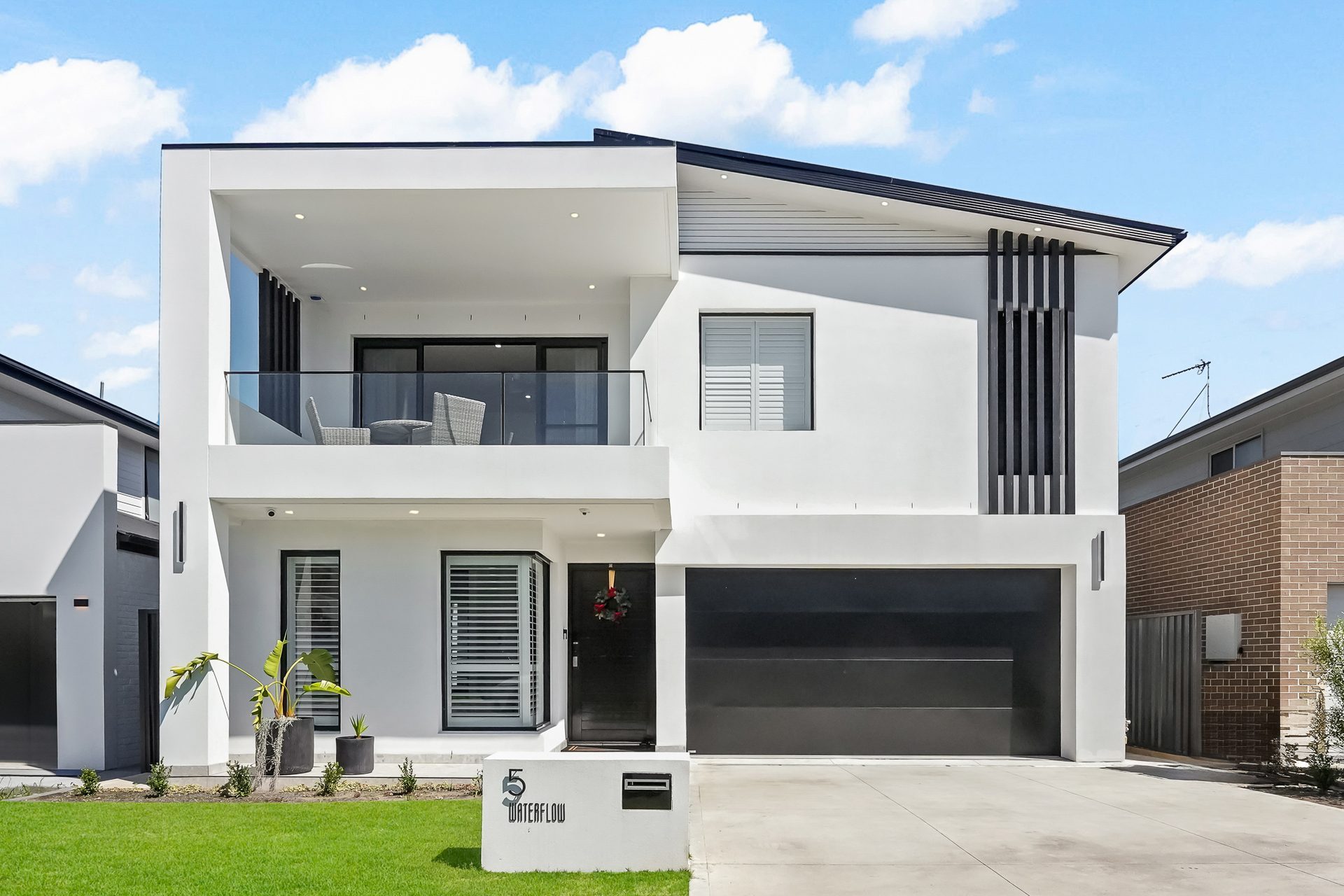
The KDR at $489k on the same block gives you a brand-new 4-bedroom double storey, 200+ m² GFA, engineered from scratch to 7-star BASIX, whole-house warranty. See our Blacktown KDR guide for the full breakdown of what’s included.
Where renovation beats KDR
Three genuine scenarios.
1. Heritage or character constraints. A block in a heritage conservation area, or a 1930s home with strong period character that a buyer would pay for, is a renovation play. The KDR pathway is either blocked (heritage listing) or throws away the value in the character.
2. Underlying structure that’s genuinely sound. Some 1980s and 1990s builds have surprisingly good structure — steel frames, full brick construction, generous ceiling heights, sensible layouts. Renovation of a sound house keeps what works and updates what doesn’t. Genuinely uncommon on 1980s Western Sydney stock but not zero.
3. Timing constraint. Renovation timelines can start faster than a KDR if the design is minor (some renovations are exempt development, some CDC-only, both faster than DA). A family that must be in a habitable home by a specific date sometimes chooses renovation for speed alone.
Where KDR wins decisively
Most of the time in Blacktown, Seven Hills, Kellyville and Penrith, KDR wins. Three drivers:
1. Energy performance. Retrofitting a 1980s house to 7-star NatHERS is genuinely hard. The wall cavity is too shallow for modern insulation, the windows fight fixed openings, and the slab has no insulation underneath. A KDR starts at the required target. Over 15 years, the utility saving alone typically covers $18-$28k of the additional cost.
2. Layout. 1980s houses have compartmented living, cramped bedrooms, no walk-in pantry, no ensuites, no alfresco. Any renovation that fixes all four requires structural changes — load-bearing walls, roof extensions, footprint additions — which quickly reaches 60-70% of a KDR cost without matching the outcome.
3. Warranty. A KDR carries 6 years major defects warranty on the entire house. A renovation carries warranty only on the new work; the retained 1980s structure remains without cover.
The financial cross-over point
Renovation makes financial sense when its total cost stays under about 55-60% of an equivalent KDR. Above that ratio, KDR beats renovation on almost every measure. On a 1980s Blacktown 3-bed, a $250k light renovation (kitchen + one bathroom + paint + carpet) reaches the 55% threshold and can make sense. A $380k full renovation approaches 80% of a Modern Essential KDR, and the value comparison tilts sharply toward KDR.
Frequently asked questions
Is it cheaper to renovate or knock down and rebuild a 1980s Blacktown house?
Cheaper upfront: renovation, by roughly $80k-$140k depending on scope. Cheaper over 15 years including utilities, maintenance and resale: KDR, by roughly $30k-$80k. And KDR gives you a bigger, newer house with full warranty. On our own client history, KDR beats renovation on total return about eight out of ten times.
How long does a full renovation take vs a knockdown rebuild?
Full renovation: 9-15 months (3-5 months approvals + 6-10 months construction). KDR: 10-14 months (approvals + demolition + construction). The two timelines are surprisingly close because renovation approvals for structural works are as involved as a KDR DA in many cases.
Do I need to move out during a renovation?
Depends on scope. Kitchen-and-bathroom-only renovations are sometimes done with the family living in reduced-service mode for 3-4 months. Structural renovations (opening living space, adding a second storey, replacing the roof) almost always require moving out for 4-6 months. Full renovation to the scope described in this post — almost always requires moving out.
Can I claim depreciation on a KDR that I rent out?
Yes, and the depreciation schedule on a brand-new building is far more generous than on an established property. A quantity surveyor’s depreciation schedule for a $489k KDR typically claims $12-$18k in the first year and $6-$9k per year in years 2-15. Talk to your accountant.
What is the minimum I should spend on a 1980s Blacktown renovation to add value?
Below about $180-$220k you get diminishing returns on resale — cosmetic-only renovations (paint, carpet, one bathroom) don’t move the price much. Between $220-$380k a full renovation lifts value by roughly 1.2-1.5x the spend. Above $380k, you’re approaching KDR territory and renovation ROI tapers.
Can I renovate part of the house and knock down and rebuild the rest?
Technically yes — this is a partial demolition and addition project. Approval-wise it’s usually treated as a substantial redevelopment (DA required), and cost-wise it often lands between full renovation and full KDR without matching either’s outcome. Rarely the best economic choice; occasionally the right answer where a genuine heritage element is being preserved.
Weighing renovation vs KDR on a Blacktown, Seven Hills, Kellyville or Penrith block? Get a fast fixed-fee quote — we run both scenarios on your actual block and let the numbers pick.
Keep reading
Thinking of building or renovating in Western Sydney?
Book a free, no-obligation consultation. We will walk through your block, your brief and your budget, and tell you honestly whether 13 Homes is the right builder for the job.
Book a Consultation